
Total Shipment Visibility, Simplified
Access all your shipment details in one place - track departures and arrivals, manage documents, notifications, invoices, and more.
Access all your shipment details in one place - track departures and arrivals, manage documents, notifications, invoices, and more.

Your first import doesn’t begin with a freight booking. It begins with decisions that can shape the shipment well before it leaves the supplier. This first time importing to Australia guide sets out what to check before placing an order, so restrictions, permits, biosecurity requirements and paperwork aren’t left until the cargo is on its way.
It’s natural to focus on finding a supplier and choosing sea or air freight. But product details, supplier documents and responsibilities at each stage can all affect how smoothly goods move through clearance and delivery.
This guide follows a practical preparation-to-delivery sequence. You’ll learn which product and supplier checks to complete, what documents to align, how freight options differ, and what happens from booking through customs clearance to final delivery. You’ll also see when to confirm requirements with Australian authorities and when a freight forwarder or customs broker may help manage the process. The aim is to give you a clear plan before you commit, with fewer unanswered questions as your shipment moves.
Your first import becomes more manageable when you make decisions in sequence: identify the goods, check whether they can enter Australia, confirm the supplier and terms, then plan freight. Commercial importing means bringing goods into Australia for business purposes, such as resale or use in your operations. A planning checklist helps identify questions and responsibilities, but it isn’t a product-specific compliance ruling. Verify requirements for the exact goods before ordering.
An import readiness check is a pre-order review of the goods, supplier, import conditions and shipping responsibilities. It helps you identify what further approvals or advice may be needed, what information to collect, and whether the transaction is ready to proceed. Use it as a decision gate, not a substitute for confirmation from the relevant Australian authorities.
Start with a precise description, not a broad label such as “equipment” or “food”. Record the product’s materials and components, intended use, and country of origin. These details can affect how goods are assessed and which import conditions apply. Country of origin means where the goods originate, which may differ from the country they’re shipped from.
Check current Australian Border Force (ABF) and Department of Agriculture, Fisheries and Forestry (DAFF) guidance for your product. The Australian Border Force (ABF) has a customs and border-control role, while DAFF guidance covers biosecurity conditions. Some goods may require permits or other checks regardless of shipment value. Treat regulated, restricted, perishable, pharmaceutical and dangerous goods as a reason to seek specialist review before purchase, not after dispatch.
Confirm who you’re buying from and request clear specifications that match the product you intend to import. Agree how samples will be reviewed and approved, and clarify production expectations before confirming the order. Keep written records of the agreed specifications and any changes. A mismatch between the goods ordered and the description supplied for shipment can lead to questions later.
Discuss packaging, labels and carton details early. Ask the supplier what shipment information they can provide and when the cargo is expected to be ready. This gives you time to check handling requirements and plan freight instead of making decisions under dispatch pressure.
Agree responsibilities under the chosen Incoterms, including the precise rule, named place and edition stated in the sales agreement. Don’t assume a short term alone explains who arranges each transport step or manages related formalities. Confirm the wording with your supplier and logistics professional so the commercial arrangement aligns with your freight plan. Incoterms don’t determine whether the goods are admissible or replace permits and biosecurity checks.
Each shipment has its own requirements, but a clear sequence helps prevent missed handovers. The broad stages are product and supplier checks, order confirmation, freight selection and booking, document preparation, arrival and customs or biosecurity assessment, release, then delivery.
Use the checkpoints below as a working sequence, not a guarantee that every import follows the same path. The goods, transport arrangement and current requirements can change what’s needed at each stage. Confirm who owns each task and keep written records of decisions.
Clear handovers matter as much as the booking itself. MTF Logistics provides international freight coordination. You can review freight coordination support and confirm responsibilities before booking.
Freight mode is an operational choice, not an import approval. Sea or air transport won’t determine whether goods are admissible, whether a permit is required, or which biosecurity conditions apply. Compare the transport plan with the product’s requirements before dispatch.
Compare the shipment’s urgency, dimensions, handling needs and the consequences of delay. Ask providers to explain the proposed service scope, routing assumptions, key milestones and how updates will be shared. A mode that suits one shipment may not suit another, and neither is universally cheaper or faster without shipment-specific details.
| Factor | Sea freight | Air freight |
|---|---|---|
| Urgency | Consider when the delivery plan can accommodate a sea-freight schedule. | Consider when timing is a priority, then confirm the proposed routing and schedule. |
| Cargo characteristics | Assess whether the cargo’s size, volume and packing suit the proposed shipment arrangement. | Check dimensions, weight and any carrier restrictions for the specific goods. |
| Handling | Confirm loading, packaging and any special handling requirements across the journey. | Confirm handling requirements and whether the cargo needs controlled or specialist treatment. |
| Planning needs | Align production readiness, booking and receiving arrangements with the planned movement. | Coordinate dispatch readiness and receiving arrangements against the proposed schedule. |
For a more focused mode overview, read about reliable sea freight services and air freight in Australia.
Each document serves a different purpose. The commercial invoice records the sale and describes the goods and transaction. The packing list sets out how goods are packed, including package details and quantities. A bill of lading for sea freight or an air waybill for air freight records key transport information. Check that product descriptions and quantities match the goods and packing information across all documents.
Tariff classification, country of origin and accurate product details can affect how duty and tax treatment is assessed. If classification or origin evidence is uncertain, ask a qualified customs adviser to review it and verify current requirements before relying on a rate or preference. Separately check applicable permits, standards and biosecurity conditions with the relevant Australian authorities before dispatch. Share confirmed requirements with your supplier and freight provider so the documents and handling plan reflect them.
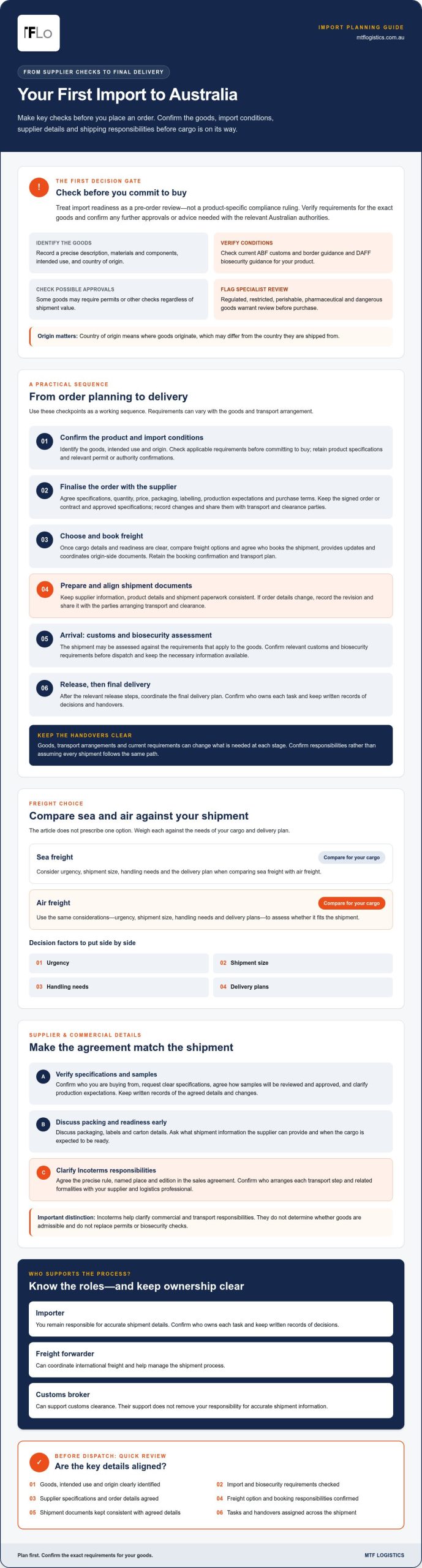
A checklist works best when each task has an owner and a deadline. Use these checkpoints to put your import plan into practice. Keep confirmations in one shipment file and resolve gaps before cargo dispatch wherever possible. A forwarder or broker can support their agreed tasks, but the importer remains responsible for supplying accurate product and transaction information.
These checks make handovers visible and give each party a clear next action. MTF Logistics offers international freight and customs clearance support. See freight and customs clearance support for more information.
Specialist support can help clarify responsibilities, particularly when freight booking, shipment documents and customs clearance involve different parties. A freight forwarder and a customs broker have distinct roles, though their work may be coordinated. Their involvement doesn’t transfer the importer’s responsibility to provide accurate product, supplier and transaction details or to confirm product-specific requirements with the relevant authorities.
A freight forwarder coordinates international transport according to the agreed scope. This may include arranging sea or air freight and sharing shipment milestones, helping the importer track key handovers and prepare for arrival. Confirm which origin arrangements, updates and delivery coordination are included rather than assuming every service covers the entire journey.
A customs broker provides specialist support with preparing and managing the customs clearance process. The broker may need accurate goods descriptions, values, origin details and supporting documents from the importer. Clearance outcomes and timing depend on the shipment and applicable requirements, so outsourced support isn’t a guarantee of release or a substitute for permits, inspections or other approvals.
Before engaging a provider, ask for responsibilities and communication steps in writing. These questions can clarify the scope:
Clear answers help you compare providers on more than the freight quote. They also show where the importer, supplier, forwarder and broker need to exchange information. If a product requirement is uncertain, confirm it with the relevant Australian authority before dispatch and share any applicable written guidance with your logistics partners.
MTF Logistics provides sea freight, air freight, customs clearance and project logistics for importers. For a wider business-focused overview, read the guide to importing goods into Australia. You can also discuss which freight and customs support may suit your shipment with MTF Logistics.
A successful first import is planned as a sequence, not treated as a freight booking. Check the goods and supplier before committing, align shipment documents before dispatch, and confirm current permit, customs and biosecurity requirements with the relevant authorities. Then make responsibilities clear across the importer, supplier, freight forwarder and customs broker.
This guide gives you a practical framework, but shipment-specific details still matter. MTF Logistics provides sea freight, air freight, customs clearance and project logistics, with services available nationally across Australia.
Discuss your first import with MTF Logistics and clarify what support may fit your shipment. With checks completed in the right order and clear handovers between everyone involved, you can move ahead with greater confidence.
Not every product requires a permit, but some goods need permits or other approvals before import or release. Requirements depend on the exact goods, materials, intended use and current rules, so don’t rely on a broad product category or a supplier’s assurance. Check Australian Border Force guidance and the relevant regulator’s requirements before ordering. If you’re unsure whether a permit applies, confirm with the responsible Australian authority or a customs broker before dispatch.
Common shipment documents include a commercial invoice, packing list and transport document. The invoice records the transaction and describes the goods; the packing list shows how they’re packed and in what quantities. The carrier issues a bill of lading for sea freight or an air waybill for air freight. Depending on the goods and transaction, you may also need permits or evidence of origin. Goods valued over A$1,000 require a formal import declaration.
Identify the exact product, its materials and components, intended use and country of origin, then check current Australian Border Force and Department of Agriculture, Fisheries and Forestry guidance. Some goods may need permits, treatment or other checks, regardless of shipment value. Use this guide to organise your questions, but confirm product-specific requirements with the relevant authority before ordering or dispatching goods.
Choose based on the shipment’s urgency, size, handling needs and the consequences of delay. Compare the proposed route, service scope, milestones and delivery plan with freight providers. Don’t assume one mode will always be cheaper or faster; the right option depends on shipment details and the arrangements available. Confirm who books the transport, shares updates and coordinates origin-side documents before the supplier dispatches the goods.
Contact a customs broker before confirming an order if you’re unsure about tariff classification, documentation or clearance requirements. Early advice gives you time to clarify what product and transaction details are needed and whether further checks may apply. Share accurate specifications, values, origin information and supplier documents. A broker can support preparation and management of customs clearance, but you remain responsible for the accuracy of the information you provide.
No. Whether duty or GST applies depends on factors including the goods, their value and applicable rules. Goods valued over A$1,000 require a formal import declaration. For goods valued at or below A$1,000, there are generally no duties, taxes or charges, except for tobacco and alcohol; GST is typically collected by the vendor at sale. GST of 10% applies to most imported goods. Verify current treatment for your shipment.
If authorities require an inspection, treatment or other biosecurity action, follow their instructions and provide any requested information or documents. Requirements depend on the goods and their condition, so check them before dispatch rather than assuming the cargo will be released without further checks. Coordinate with your supplier, freight forwarder and customs broker as needed, and don’t plan delivery around a guaranteed release time while an inspection or other requirement remains outstanding.


 Email
Email 1300 710 683
 Tariff Lookup
 HS Code Lookup
 Newsletter Signup